
When I say the word ‘design,’ you may think of design as a rarefied field of expertise–architects doing genius things in their studios. And when I say ‘disability,’ far too many people think of disability as a very particular issue or identity topic that doesn’t really affect that many of us.
But just look around at our built environment. In the last 20 years, these two things have come together in ways that have completely changed the face of modern cities—think dropped kerbs or closed captioning on TV, for instance. And in a fascinating conversation about the unexpected connections between design and disability, UKAAF spoke this month with a US-based researcher who works with artists, students, engineers, and people with disabilities to explore that connection.
The lady in question is Sara Hendren, who is a writer, design researcher, and professor at a place called Olin College of Engineering in Massachusetts. As we learn from her chat with Roger, which was published at the start of March and available here on YouTube, where she works is in many ways as unusual and inter-disciplinary as she is herself, as it prides itself on challenging students to think beyond just the maths side of their discipline.
In any case, Sara, a graduate of Harvard University, progressed from fine arts to teaching to researching artefacts and their place in cultural history—but, as she explains, it was the birth of a child with Down’s Syndrome that really set her on her current path: seeing the artefacts she had been fascinated with in a whole new light.
Looking at the built environment in a completely new way
“From when he was very small, we would go to physical therapy, occupational therapy, speech therapy, doctor’s offices,” she tells Roger. “And all of those environments were just full of the material culture of disability and assistive technology but also design–so the things that he wore, the little glasses that he wore as a baby, the orthotic braces for his shoes to help him learn to walk, all the balls and the mats and the sensory toys—all manner of material culture to bridge the gap between his body, his low muscle tone and some of those challenges, and then the normative structures of the world.”
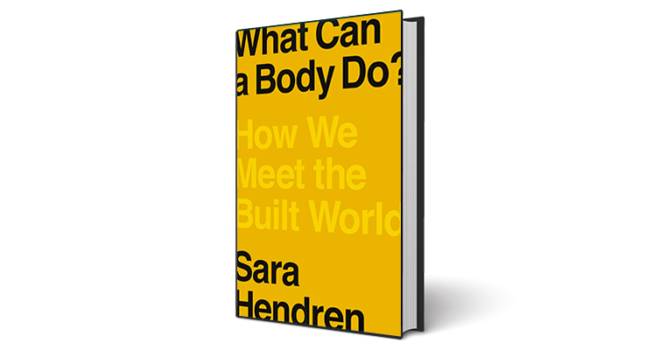
As she explains, Sarah went back to University and started to study Design instead, with a focus on what disability produces in the world. That fascination has produced a lot of great work, culminating in her latest book, which we definitely recommend you read: What Can a Body Do?: How We Meet the Built World (2020). There, she delves into everything from prosthetic limbs (their history and connection to War) to products, furniture, spaces for deaf people, dementia villages, and so much more.
It’s really an amazing history of the world through the physical Design of the world around us through a lens we very seldom see through—disability. So if any of this grabs you, and I hope it does, head over to the webinar—maybe via Amazon, Bookshop.UK or Talking Books as you prefer to get the book. It’s 37 minutes that may change how you see the world for ever…
