
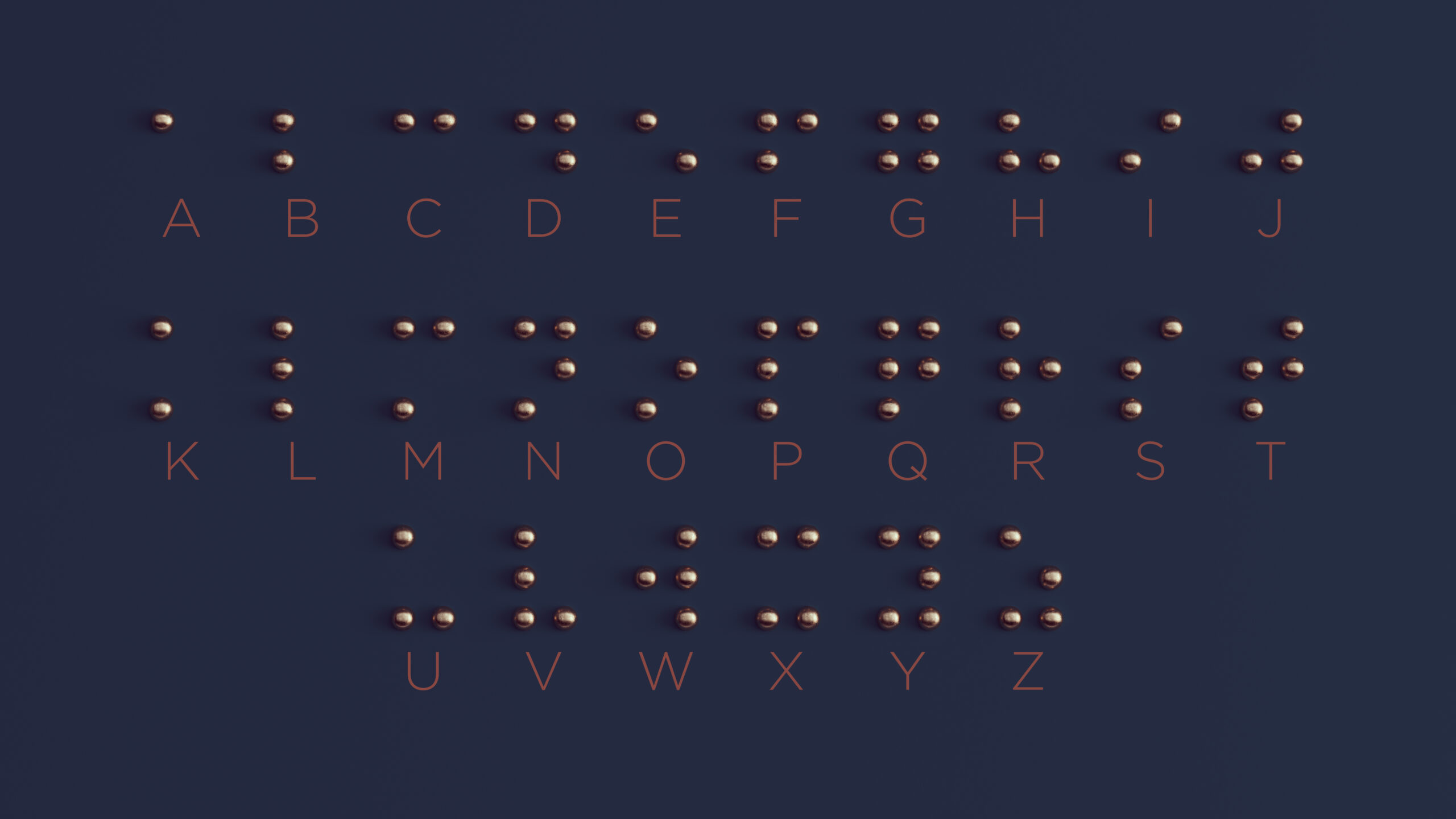
As you will hopefully know by now, UKAAF’s making a useful monthly online discussion a part of our resource for both members and the public. To mark World Braille Day last month (January 4th–as if you didn’t know!), Roger conducted a great 25-minute chat with Stuart Lawler from Northampton-based Sight and Sound Technology (please watch it yourself, or re-watch, on our YouTube channel here).
Webinar Transcripts: PDF, DOCX, BRF
If you’re not familiar with the company, Sight and Sound is a leading UK and Ireland provider of hardware and software for the blind, visually impaired and those with learning and reading difficulties. Stuart is Business Development Manager with its Irish arm, is blind, and has been learning and using braille for over 40 years. As we learn from the conversation, Roger has a lot of history with Stuart, back to his music student days. They then bring things up to date quickly with their views on where we are with braille, especially in terms of its use and general familiarity with it. This is a very truncated summary of the main points of the conversation.
Roger: The first time our paths crossed was when you were at University, and I wonder if you could say something about how you used braille during your course, and what braille provision was available at that time?
Stuart: In the mid-90s, I was studying music in Cork here in Ireland, and you came over with a colleague from the RNIB to talk about how the college could support me as a blind music student. That gave me a lot of hope as a young student to think that here was somebody who was blind, and who was not only working, but working in a role that was supporting other blind people to succeed. So, I thank you for that.
In terms of what was available back then, even in Higher Education, there was very little. There was a braille printer on campus, and they just didn’t have the resources to produce braille. But because I was somewhat tech literate, I suppose and because I had used some of this technology in school, I started using that printer myself and did my own brailling, and over time for other students as well. So, the tools were there; I think just not everybody really knew how to use them, so we kind of just got through.
How are things today?
It’s a lot better. But I think one of the challenges today within our University system is that there is still a cohort going through who sadly, and it’s terrible to say this on World Braille Day, are not using braille at all. But I think it’s going to come back up again, because the mainstream education system here in Ireland, probably like the UK, is now better equipped and better understands the need for, and importance of, braille. The bigger universities are also well resourced, but students now have a lot more technology, like refreshable braille displays, for example, are available, as are braille notetakers–things that I did not have access to.
Do you feel that the landscape has changed for the better?
If we just stay on the music side for a sec, I think there are still situations where I hear people say things like braille music is too hard. But the people who say that tend to be sighted teachers who may have limited knowledge of it and who feel, maybe with the best intentions, that it’s too hard for somebody that they’re supporting. My kind of answer to that is, well, everything is hard: everything requires you to put time into it–learning a new language is hard, and maybe the older you get, the harder it becomes. But braille of any sort is going to take time. ‘Little and often’ is what I say to learners.
Working as you do for a company selling technology and offering associated support, how do you read the picture at the start of 2022 and what might be the challenges and opportunities for braille right now?
Well, everybody’s been embracing online meeting platforms and there’s no real sign of us coming out of it anytime quickly. So, we’ve all had to embrace new ways of doing things, of keeping in touch, of maintaining social contacts with people where we can’t be face-to-face and learning and working and doing all those things that where life must go on. I think there’s a danger that we’re going to look back in five years and see the digital literacy divide has gotten greater. The technology needs to be fluid enough to work for the greatest number of people. Even people who don’t have very many tech skills should be able to use your piece of technology.
Also, the price of braille technology remained stubbornly high. That’s very frustrating, especially for users, so I think there needs to be more done in pushing back on that. I think the work that’s been done to make low-cost braille displays around the world is good, but there needs to be more, because that’s probably not sufficient and it’s not something that you would use day in, day out in college or in your professional life. I think that those things will be a work in progress, price will continue to come down–and the quality and performance of the devices will hopefully continue to improve.
Knowing what you now know, what might you say to a younger Stuart Lawler setting out on a journey embracing braille today?
What I really think is the people who can best advocate for and lobby for and campaign for braille are braille users themselves. When I was in college, I didn’t do that– I wasn’t shouting for it, and I think that’s part of the reason it probably took longer to reach me. If you are blind and setting on an airplane and they come around with the braille safety guide and ask if you want it—even if you’ve seen it a hundred times, always take it. Because if you don’t, someone will say nobody wants that, so we won’t bother doing braille anymore.
So, take it, pretend to read it, smile and hand it back. The same in a restaurant: even if you can’t read braille, take it anyway, pretend to read it and hand it back. We need people to show the sighted world why braille is so important, and there’s no better day to champion this and talk about it than today on the 4th of January. So, if I was talking to my younger self, I’d say advocate for more braille, because the more people who ask for it, the better chance we have of getting it.
I only go on a plane once a year, but I’ve never been offered braille instructions: do any of these airlines provide braille instructions?
Aer Lingus, which is the Irish carrier here does for sure, and I do believe British Airways does too. A lot of the low-cost carriers don’t, as they don’t even provide print handouts, they just put it up in a general area and you just look over glance over at it. But there’s no harm and will do us all good if you ask for instructions in braille: it all goes back to the thing of advocating for braille.
So, thanks to Stuart for a great conversation, which also included very interesting points about braille as an official EU language; Happy World Braille Day–and Happy 213th Birthday, Monsieur Braille!
